
- All
- Product Name
- Product Keyword
- Product Model
- Product Summary
- Product Description
- Multi Field Search


Views: 0 Author: Site Editor Publish Time: 2025-12-19 Origin: Site


Choosing the right material for your kitchen or bathroom remodel can feel like navigating a maze. You have granite, quartz, marble, laminate, and concrete, all vying for your attention. Then, you hear the term "solid surface." It sounds durable, but what does it actually mean? Is it stone? Is it plastic? And most importantly, is it right for your home?
If you are looking for a material that balances affordability, durability, and aesthetics, a solid surface countertop might be your answer. This guide breaks down exactly what this material is, how it compares to natural stone, and why it has remained a popular choice for decades.
To understand what a solid surface countertop means, you have to look at its chemistry. Unlike granite or marble, which are mined from the earth, solid surface is a man-made material. It was originally created to mimic the look of natural stone while eliminating some of stone's inherent drawbacks, like porosity.
A solid surface countertop is typically made from a blend of:
· Mineral Dust: Usually derived from bauxite (marble dust).
· Resins: Acrylic or polyester resins (or a mix of both) act as the binder.
· Pigments: Added to create specific colors and patterns.
The "solid" in the name refers to its consistency. If you cut a piece of granite, the pattern might change depending on the vein. With solid surface, the color and pattern go all the way through the material. If you slice a cross-section of a solid surface slab, it looks exactly the same in the middle as it does on the top. This homogeneity is what allows it to be sanded and repaired seamlessly.
Not all solid surfaces are created equal. They generally fall into two chemical categories:
1. Acrylic-based: These are generally considered higher quality. They are easier to fabricate, can be thermoformed (bent with heat), and are more durable.
2. Polyester-based: These tend to be more brittle and harder to work with, but they can achieve glossier finishes and more vibrant colors than acrylics.
Why do homeowners and designers continue to choose this material despite the rise of engineered quartz? It offers a unique set of benefits that other materials struggle to match.
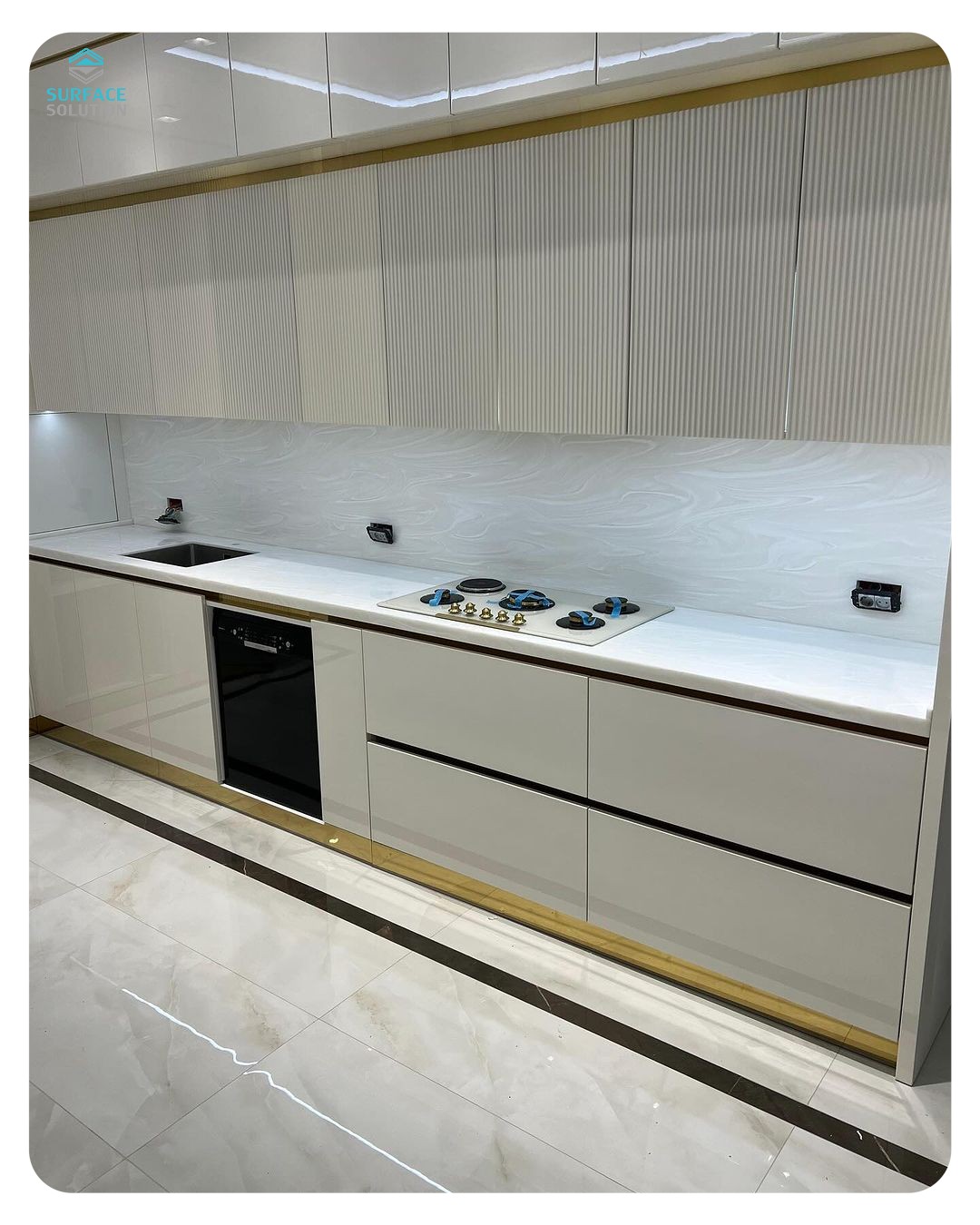
Hygiene is a massive factor in kitchens and bathrooms. Natural stone is porous, meaning it has microscopic holes that can trap bacteria, viruses, and liquids. Solid surface materials are completely non-porous. They do not require sealing, ever. This makes them approved for use in commercial food preparation areas and hospitals, where sanitation is critical.
This is the superpower of solid surface countertops. Because the material is bonded with a color-matched adhesive and then sanded down, the seams become virtually invisible to the naked eye. This allows for long, sweeping countertop runs that look like a single piece of material. It also enables integrated sinks, where the sink is fused directly to the countertop, eliminating the grime-trapping lip found in drop-in or undermount sinks.
Accidents happen. If you chip a granite edge or crack a quartz slab, the repair is often difficult and visible. However, a solid surface countertop is renewable. Minor scratches can be buffed out with a Scotch-Brite pad. Deeper cuts or burns can be sanded down by a professional. In extreme cases, a piece of the material can be cut out and replaced so seamlessly that you wouldn't know damage ever occurred.
Designers love solid surface because it becomes pliable when heated. It can be bent into curved shapes, creating rounded islands, flowing backsplashes, or custom furniture pieces that would be impossible with stone.
The quality of your installation often depends on the manufacturer. Brands like Letu Surface have pushed the boundaries of what this material can do. By refining the ratio of resin to mineral, high-quality manufacturers ensure the material is hard enough to withstand daily wear but flexible enough to prevent cracking during installation.
When sourcing materials, looking for established providers like Letu Surface ensures you are getting a product with consistent color batching and structural integrity. Cheaper, generic solid surfaces may contain higher percentages of filler, making them more prone to cracking or yellowing over time.
To truly understand where solid surface fits in the market, it helps to see it side-by-side with its biggest competitors: Granite and Quartz.
Feature | Solid Surface | Granite | Quartz |
Material Type | Synthetic (Resin + Mineral) | Natural Stone | Engineered Stone (93% Quartz) |
Porosity | Non-porous (No sealing needed) | Porous (Needs annual sealing) | Non-porous (No sealing needed) |
Seams | Virtually Invisible | Visible | Visible |
Heat Resistance | Low to Moderate (Can melt/burn) | High | Moderate (Resin can discolor) |
Scratch Resistance | Low (Scratches easily but repairable) | High | High |
Maintenance | Easy (Soap & water, scouring pads) | Moderate (Special cleaners, sealing) | Easy (Soap & water) |
Repairability | High (DIY friendly for small scratches) | Low (Hard to hide repairs) | Low (Hard to hide repairs) |
No material is perfect. While a solid surface countertop is versatile, it has two main weaknesses: heat and scratches.
Heat Sensitivity
Because it is plastic-based, it can melt or scorch. You cannot place a hot pot directly from the stove onto a solid surface countertop. It will leave a permanent white burn mark or potentially crack the material due to thermal shock. Trivets and hot pads are non-negotiable requirements.
Susceptibility to Scratches
Solid surface is softer than stone. Cutting directly on the surface will leave knife marks. While these can be sanded out, it is an annoyance for serious cooks who prefer hard surfaces.
One of the defining features of solid surface is that it typically requires professional installation. Because the value lies in the seamless look, specialized tools and adhesives are needed to join the sheets.
In terms of cost, solid surface sits comfortably in the middle tier. It is generally more expensive than laminate but often cheaper than premium granite or high-end quartz. This mid-range pricing makes it an excellent choice for large kitchens where covering square footage with marble would be cost-prohibitive.
So, what does solid surface countertop mean for your renovation project? It means choosing a material that prioritizes hygiene, seamless aesthetics, and repairability over the raw hardness of stone.
It is an ideal choice if:
· You hate seeing seams in your countertop.
· You want a sink that is integrated directly into the counter for easy cleaning.
· You are renovating a high-traffic bathroom or a kitchen where maintenance needs to be low.
· You prefer a matte or satin finish over the high gloss of polished stone.
However, if you are a chef who constantly moves hot pans around or you want the specific, chaotic beauty of natural geological veins, granite or quartzite might be a better fit.
A solid surface countertop offers a balance that is hard to find elsewhere in the construction industry. It provides the elegance of stone without the maintenance headaches. Whether you choose a trusted brand like Letu Surface or another major manufacturer, you are investing in a material that is designed to be lived on, not just looked at. It is warm to the touch, forgiving of impacts, and renewable enough to last for decades.


