
- All
- Product Name
- Product Keyword
- Product Model
- Product Summary
- Product Description
- Multi Field Search


Views: 0 Author: Site Editor Publish Time: 2025-12-01 Origin: Site


When planning a kitchen or bathroom renovation, one of the biggest decisions you'll make is choosing the right countertop material. You want something that's not only beautiful but also durable enough to handle daily life. While natural stones like granite and marble have long been popular choices, a highly versatile and resilient alternative has been gaining significant ground: engineered stone.
Engineered stone offers the best of both worlds—the timeless beauty of natural stone combined with modern technology for enhanced durability and consistency. If you've been hearing about this material but aren't quite sure what it is or if it's right for you, you've come to the right place. This guide will walk you through everything you need to know about engineered stone, from how it's made to its benefits and popular applications.
Engineered stone is a composite material created by combining crushed natural stone with a polymer resin binder. The most common type is engineered quartz, which typically consists of about 90-95% ground quartz and 5-10% resins, polymers, and pigments. This mixture is compacted under intense pressure and heat in a process called vibrocompression, which creates a dense, non-porous slab.
The manufacturing process allows for a high degree of control over the final product's appearance. By adding different pigments and using various sizes of quartz crystals, manufacturers like Letu Surface can create a vast array of colors and patterns. Some designs mimic the look of natural stones like marble or granite, while others offer unique, contemporary aesthetics that aren't found in nature.
This controlled process ensures that every slab of engineered stone has a consistent color and pattern, which is a significant advantage over natural stone, where variations and imperfections are common.
Like any material, engineered stone has its unique set of advantages and disadvantages. Understanding these can help you decide if it’s the right fit for your project.
· Exceptional Durability: Engineered stone is incredibly hard and resistant to scratches, chips, and cracks. Its high quartz content makes it one of the most durable countertop materials available, perfect for busy kitchens and high-traffic areas.
· Non-Porous Surface: The manufacturing process creates a non-porous surface, meaning it doesn't absorb liquids. This makes it highly resistant to staining from common household substances like wine, coffee, and oil. It also means the surface is hygienic and won't harbor bacteria or mold.
· Low Maintenance: Unlike natural stone, engineered stone does not require sealing. Cleaning is simple—just use soap and water for daily maintenance. This low-maintenance quality saves you time and money over the long term.
· Design Consistency: Because it's a manufactured product, engineered stone offers uniform color and patterning. The slab you see in the showroom is exactly what you'll get, eliminating the surprises that can come with the natural variations in granite or marble.
· Wide Variety of Styles: With the ability to add pigments and control the design, the aesthetic possibilities are nearly endless. You can find engineered stone in a spectrum of colors, from bright whites to deep blacks, with patterns ranging from subtle veining to bold, dramatic looks.
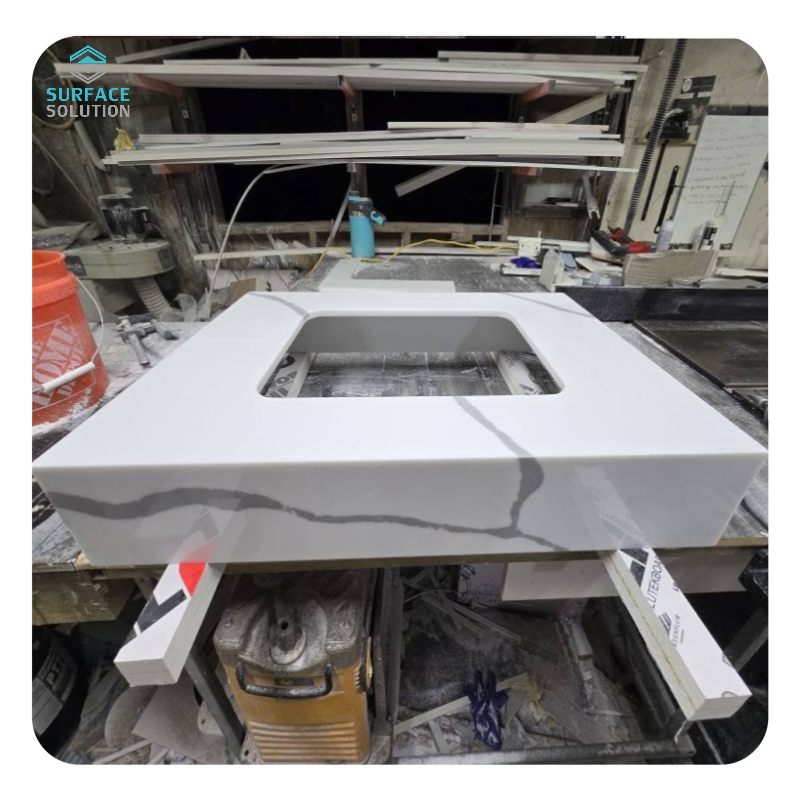
· Limited Heat Resistance: While generally heat-resistant, engineered stone can be damaged by sudden and extreme temperature changes. The resin binders can scorch or discolor if a hot pot or pan is placed directly on the surface. Using trivets or hot pads is always recommended.
· Visible Seams: For larger countertops that require more than one slab, the seams between the pieces may be more noticeable than with some natural stones. However, a skilled installer can minimize their appearance.
· Not Suitable for Outdoor Use: The resins in engineered stone can discolor and break down when exposed to direct sunlight and UV rays over time. For this reason, it is generally not recommended for outdoor applications like patio kitchens.
Choosing between engineered and natural stone often comes down to lifestyle, budget, and personal preference. Here’s a quick comparison to help you weigh your options.
Feature | Engineered Stone | Natural Stone (e.g., Granite, Marble) |
Composition | 90-95% crushed quartz, 5-10% polymer resins and pigments. | 100% natural stone, quarried from the earth. |
Durability | Extremely hard, resistant to scratches and chips. | Durability varies; granite is very durable, while marble is softer. |
Porosity | Non-porous, highly resistant to stains and bacteria. | Porous and requires regular sealing to prevent staining. |
Maintenance | Low maintenance; no sealing required. Clean with soap and water. | Requires periodic sealing. Susceptible to stains if not sealed properly. |
Appearance | Consistent color and pattern. Wide range of styles. | Unique, one-of-a-kind veining and patterns. Natural variations. |
Heat Resistance | Can be damaged by extreme heat. Trivets are necessary. | Generally very heat resistant. |
Cost | Often comparable to mid- to high-range natural stone. | Price can vary widely depending on the type and rarity of the stone. |
Thanks to its versatility and robust properties, engineered stone is used in a variety of applications in both residential and commercial settings.
Kitchen Countertops: This is by far the most popular use. Its durability, stain resistance, and low maintenance make it an ideal choice for the heart of the home.
Bathroom Vanities: The non-porous surface is perfect for bathrooms, as it resists moisture, mold, and mildew.
Backsplashes: Using the same engineered stone for both the countertop and backsplash creates a seamless, modern look.
Flooring: In commercial spaces or modern homes, engineered stone tiles offer a durable and sleek flooring solution.
Wall Cladding: It can be used as a decorative wall covering in showers, behind sinks, or as an accent wall, adding a touch of luxury.
Engineered stone has rightfully earned its place as a leading material in modern interior design. Combining the beauty of natural minerals with advanced manufacturing, it delivers a surface that is not only stunning but also built to last with minimal upkeep. Brands like Letu Surface continue to innovate, offering an ever-expanding selection of designs that cater to any style, from classic to contemporary.
If you value consistency, durability, and low maintenance without sacrificing aesthetic appeal, engineered stone is an excellent choice for your next project. By understanding its properties and comparing it to other materials, you can confidently select a surface that will bring you joy and functionality for years to come.


